
Direct Bookings Versus OTAs for Rental Hosts
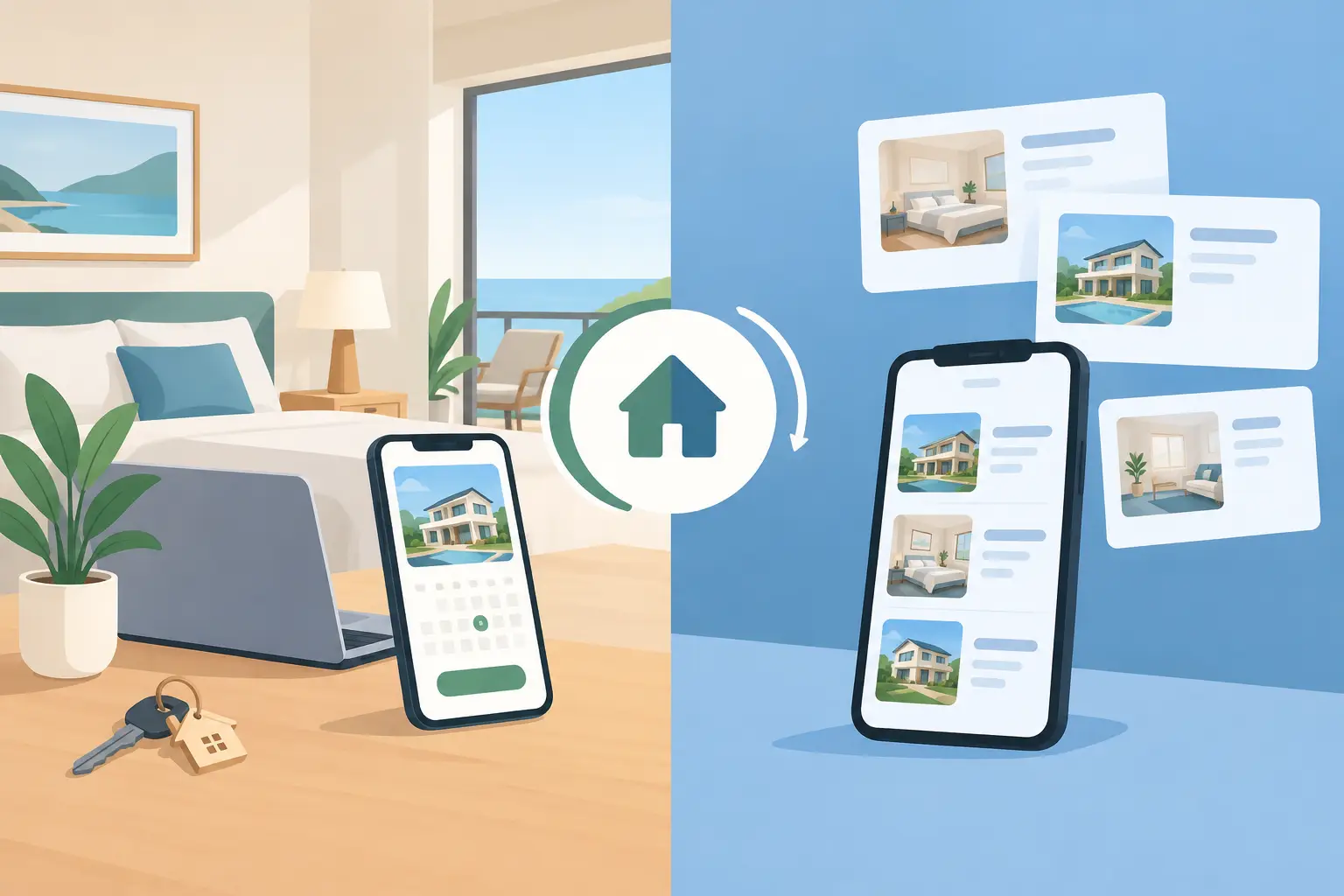
A guest books the last open weekend on one channel while you are updating prices on another. Then a repeat guest asks whether they can book directly next time. These are the everyday decisions behind direct bookings versus OTAs - and they are less about choosing one path than building a reliable mix that works for your properties.
Online travel agencies, often called OTAs, can put a listing in front of travelers who would not otherwise find it. Direct bookings give you a clearer relationship with guests and more control over the booking journey. Both can support a healthy rental business, provided your availability, rates, stay rules, and guest communication stay aligned.
Direct bookings versus OTAs: give each channel a job
OTAs are often strongest at discovery. A traveler searching for a cabin, city apartment, or family-friendly home may begin on a large booking marketplace because it feels familiar and offers plenty of options in one place. For a new property or a host entering a new market, that visibility can help fill gaps in the calendar.
Direct bookings serve a different purpose. They give guests a path back to your business after they have had a good stay, heard about you from a friend, or found your property through search, social media, or a local recommendation. Your website can explain what makes the home suitable for a particular trip, answer common questions, and show your policies without competing for attention beside similar listings.
The practical goal is not to force every guest into one channel. It is to avoid relying on a single source of demand while giving returning guests a simple, professional way to book with you again. That balance will look different for a host with one apartment than for a manager coordinating several homes across different locations.
The economics are broader than the reservation total
It is tempting to compare channels using only the amount left after a booking. That number matters, but it does not tell the whole story. A direct booking may require investment in a website, payment processing, content, and guest acquisition. A channel booking may bring demand you could not efficiently create yourself, especially in quieter periods or unfamiliar markets.
Look at the full cost and value of each source over time. Consider the nightly rate achieved, length of stay, cancellation pattern, guest support workload, and likelihood that the guest will return. A three-night reservation from a guest who becomes a repeat visitor may be worth more to your business than its first stay suggests. On the other hand, a channel reservation that fills an otherwise empty midweek gap can be highly valuable too.
Direct bookings can also give you more flexibility in how you present extras, local guidance, and property-specific information. That does not mean every guest wants a long sales journey. Most simply want confidence: clear photos, accurate availability, straightforward totals, secure payment, and a fast answer when they have a question.
Guest control starts before check-in
The booking source affects what you know about a guest and when you can communicate with them. With direct reservations, you can design the pre-arrival flow around your own operation. You can collect the information you need, send a guidebook at the right time, explain parking or access, and make house rules easy to find.
With OTA reservations, communication and required steps can vary by channel. That is manageable when your team works from one shared inbox and follows a consistent process. It becomes harder when reservation details are copied manually between extranets, email threads, cleaning chats, and spreadsheets.
The guest should not feel the difference behind the scenes. Whether they booked through a channel or your website, they still need accurate arrival instructions, prompt answers, a clean property, and a clear way to request help. Your channel mix only works when the operating system behind it is organized.
Keep availability and rules in one place
A direct-booking strategy creates more value when it does not create more admin. If you add a website but continue updating prices, minimum stays, and blocked dates separately across every channel, the risk is familiar: price mismatches, missed changes, and calendar conflicts.
Set a single source of truth for availability, pricing, and stay restrictions. A connected property-management system and channel manager can distribute those settings across your booking channels and direct site automatically. This helps reduce double bookings while keeping your team focused on guests rather than repetitive updates.
Use the same operational standards everywhere
A channel should not determine whether a reservation receives good internal coordination. Build one workflow for every stay: confirm the reservation, assign cleaning, send the right guest messages, manage access codes where applicable, and record any maintenance issue for follow-up.
Hostavi is designed around this kind of centralized work. Reservations from booking channels and direct bookings can sit in one calendar, while shared guest messages, cleaning workflows, guidebooks, invoicing, and performance reports support the rest of the stay. The point is not to add another dashboard. It is to reduce the switching between separate systems that causes small errors to become guest problems.
Make your direct site earn trust
A direct-booking website does not need to be complicated, but it must answer the questions that stop guests from completing a reservation. Show accurate availability and prices. Explain what is included. Make the property location and sleeping arrangements clear. Give guests an easy way to contact you before they book.
Your policies matter here as well. Present cancellation terms, payment timing, security deposits if applicable, and check-in requirements in plain language. Rules can vary by location and booking source, so review current legal, tax, and platform requirements for your business before publishing them.
Good direct booking pages are specific. A family traveling with a stroller wants to know about stairs, parking, and bedrooms. A business traveler may care more about Wi-Fi, a workspace, and arrival time. Clear details attract better-fit guests and can reduce repetitive pre-booking questions.
Choose the mix based on your actual demand
There is no universal target for direct booking share. A property in a destination with strong repeat business may have a clear opportunity to build direct demand. A new listing, seasonal home, or rental in a highly competitive market may benefit more from broad channel exposure while its reputation grows.
Start by looking at where your bookings currently come from and when they arrive. If one channel fills weekends but leaves weekdays open, you may use another source to reach a different traveler type. If guests regularly ask to return, make sure your post-stay communication gives them a clear, permitted way to find your direct website later.
Avoid changing everything at once. Keep channels that bring bookings, then strengthen the direct path with better property content, a clear website, and reliable follow-up. Track the results over several months, not just one busy week. Seasonality, local events, and changes in traveler behavior can distort a short-term view.
Measure what improves the business, not just volume
More reservations are useful only if they improve revenue quality and remain manageable for your team. Review occupancy, average nightly revenue, booking lead time, length of stay, cancellation trends, and source of booking. Pair those numbers with operational signals: how many guest questions arrive before check-in, how often cleaners receive late changes, and whether rate or availability corrections are becoming frequent.
If direct bookings are growing but creating more manual work, improve the flow before spending more effort driving traffic. If OTAs are delivering reservations that fit your minimum-stay and pricing strategy, they are doing useful work. The right channel mix is one your business can run accurately without asking you to be in five extranets at once.
A returning guest does not care how carefully you balanced distribution channels. They remember whether booking was clear, the home matched its description, and their arrival went smoothly. Build your direct path around that experience, keep your channel operations synchronized, and let each reservation source contribute where it makes sense.