
Vacation Rental Cleaning Task Checklist for Hosts
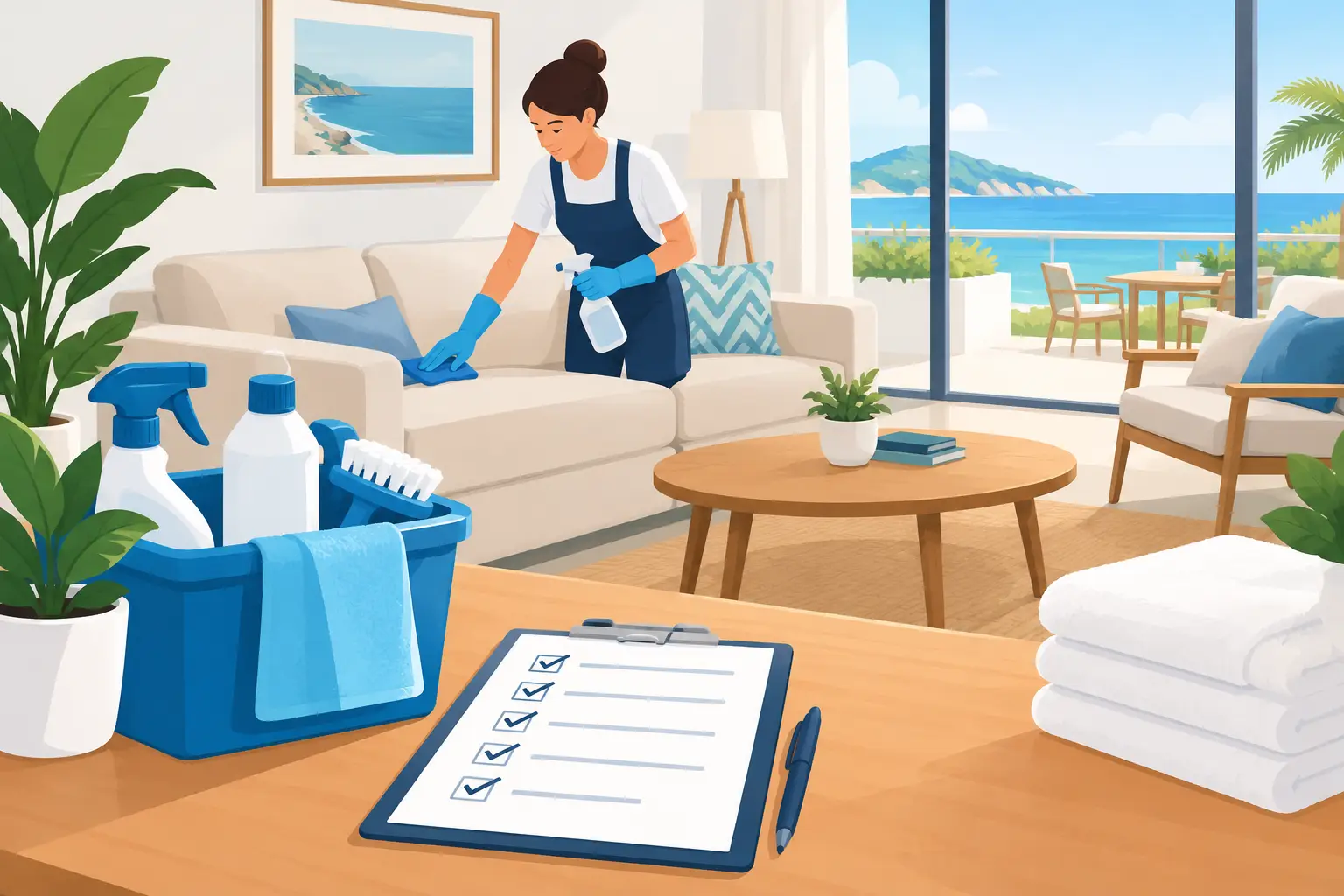
A five-star stay can be undone by one missed detail: hair in the shower drain, crumbs in the toaster, a sticky nightstand, or a lockbox that still holds yesterday’s code. Cleanliness is not a background task in short-term rentals. It is a visible part of the guest experience, and a reliable vacation rental cleaning task checklist gives your team a consistent standard when turnovers are tight.
The goal is not to make every clean take longer. It is to remove guesswork. Cleaners know what good looks like, hosts can verify the work without driving across town, and each arriving guest walks into a property that feels prepared for them, not merely reset after the last stay.
Build the checklist around the turnover, not the room
A generic house-cleaning list is a poor fit for vacation rentals. Your cleaners are preparing a home for a paying guest who will open cabinets, use every towel, charge devices, cook meals, and notice missing supplies within minutes.
Start with the tasks that apply to every turnover: remove guest items, check for damage, reset access, take out trash, replenish consumables, and confirm the property is safe and ready to enter. Then add room-specific tasks. This order matters. There is no value in making a bed before confirming the previous guest did not leave a charger underneath it or stain the mattress protector.
Your checklist should also reflect the property itself. A downtown studio may need a fast, detailed reset of linens, kitchenware, and entry access. A cabin may need porch sweeping, fireplace ash removal, hot tub checks, and a closer look for insects. A beach home may need sand control, outdoor shower attention, and extra towel inventory. One master checklist is useful, but property-specific add-ons prevent the most common misses.
Vacation rental cleaning task checklist: every turnover
Use this as the core sequence for each departure. A cleaner should mark tasks complete only after physically checking them, not based on what was completed during the prior turnover.
1. Arrival, safety, and lost-property check
Before cleaning begins, walk through every room, closet, drawer, outdoor area, and storage space guests can access. Collect and photograph lost items according to your policy. Look for obvious damage, strong odors, stains, pest activity, broken furniture, missing inventory, and maintenance issues.
Test the essentials that can stop a stay from starting smoothly: lights in primary rooms, smoke and carbon monoxide detector status, Wi-Fi router power, HVAC operation, hot water, and entry access. If a problem needs the host, maintenance team, or owner, report it right away with a clear photo and short note. Do not wait until the rest of the clean is finished.
2. Strip, launder, and reset linens
Strip used beds, pillowcases, towels, bath mats, and kitchen towels. Check mattress pads, duvet covers, pillows, and protectors for stains or damage. A freshly made bed is not enough if the protector beneath it needs replacing.
Make beds to the same standard every time. Align pillows, use clean and wrinkle-free linens where possible, and ensure each sleeping space has the correct blanket or comforter. Count towels rather than estimating. If your listing promises six bath towels, guests should find six clean bath towels, not four plus a note that more are in the dryer.
3. Clean bathrooms from top to bottom
Bathrooms create outsized review risk because guests read cleanliness there as a signal for the rest of the property. Remove trash, replace liners, disinfect high-touch surfaces, clean mirrors, scrub the toilet inside and out, and clean the sink, faucet, shower, tub, and drain.
Finish by resetting supplies. Replenish toilet paper, hand soap, shampoo, conditioner, body wash, tissues, and any property-specific amenities. Hang towels neatly and verify that the floor is dry. Water spots, stray hairs, and an empty soap dispenser are small problems that guests notice quickly.
4. Reset the kitchen for real use
Clean and disinfect counters, cabinet handles, dining surfaces, sink, faucet, stovetop, microwave, refrigerator shelves, and appliance exteriors. Empty the coffee maker and toaster tray. Check the dishwasher and hand-wash any items left inside.
Then inspect, rather than assume, that the kitchen is stocked. Count place settings, check glasses and mugs for chips, and replace missing utensils. Restock coffee, filters, tea, dish soap, dishwasher pods, sponges, paper towels, and trash bags based on your stated guest supply policy. Overstocking can increase costs and invite waste, but understocking creates avoidable guest messages.
5. Clean living areas and bedrooms in guest sightlines
Dust visible surfaces, wipe remote controls and switches, vacuum upholstery as needed, and clean under cushions where crumbs and guest belongings collect. Vacuum or mop floors, including behind doors and beneath beds when access allows. Clean mirrors and glass doors, and check that blinds or curtains open and close properly.
In bedrooms, clear drawers and closets, dust nightstands, inspect lamps and outlets, and make sure hangers are present. Stage the room simply. The objective is a calm, usable space, not a showroom full of decor that slows down cleaning and creates breakage risk.
6. Finish entry, exterior, and access tasks
Sweep the entry, porch, balcony, patio, or deck. Remove cobwebs, trash, cigarette waste, and obvious debris. Wipe outdoor furniture if it is part of the guest space. For homes with grills, pools, hot tubs, fire pits, or game areas, assign a separate documented check so responsibility is clear.
Reset the thermostat to your turnover setting, close and lock windows, turn off unnecessary lights, and confirm the correct smart-lock code or lockbox access is active for the incoming reservation. A spotless unit is not ready if the guest cannot get inside.
Add a final inspection that is separate from cleaning
Well-run operations treat quality control as its own task. Ideally, the person inspecting is not the person who cleaned, especially for larger homes or high-volume portfolios. If that is not practical, require the cleaner to do a final walkthrough from the guest’s perspective after packing up supplies.
The inspector should enter through the same door a guest will use, check the home’s smell and temperature, turn on key lights, open the fridge, inspect bathrooms, and scan floors and surfaces from standing height. Photos help when you manage remotely, but they should focus on proof points: made beds, clean bathrooms, stocked kitchen, entry condition, and any reported damage.
A final inspection also protects your cleaner. If a missing wine glass or broken lamp is documented before check-in, you have a clear record of when it was found. That makes owner conversations and guest claims more factual and less stressful.
Make ownership and timing visible
A checklist only works when someone owns it. Assign the turnover to a named cleaner, set a due time based on the next check-in, and include the departing and arriving reservation details. For same-day turnovers, build in time for inspection and fixes, not just the estimated cleaning duration.
Avoid coordinating this through scattered text threads. When a cleaner reports a broken blind in one message, asks a supply question in another, and sends completion photos somewhere else, details get lost. A centralized cleaning workflow keeps the task, notes, status, and issue reporting in one place. Hostavi, for example, lets hosts assign cleanings to their team next to the reservation calendar, with a per-property checklist, so everyone can see what is due and what needs attention before the next guest arrives.
Set clear escalation rules as well. A cleaner can replace a roll of toilet paper without approval. A water leak, damaged lock, stained mattress, or missing smoke detector needs an urgent alert. Define what cleaners may replace, what they should photograph, and which issues require a host decision before check-in.
Review and improve after real guest feedback
Your checklist should change when the property or guest feedback tells you it should. If guests repeatedly mention weak coffee supplies, add a stocking count. If reviews mention dusty ceiling fans, make them a rotating deep-clean task. If a particular cleaner consistently reports low inventory, audit whether the par level is realistic rather than assuming the cleaner is at fault.
Separate turnover tasks from deep-cleaning tasks. Baseboards, window tracks, oven interiors, shower grout, upholstery, and behind-appliance cleaning may not belong on every same-day turnover. Schedule them weekly, monthly, or by stay volume. This keeps standard cleans achievable while preventing the slow decline that guests eventually notice.
A good checklist does more than produce clean rooms. It gives you a repeatable handoff between reservations, a record when something goes wrong, and fewer last-minute calls on check-in day. When every task has an owner and every property has a clear ready-to-arrive standard, your team can move faster without cutting the details guests remember.